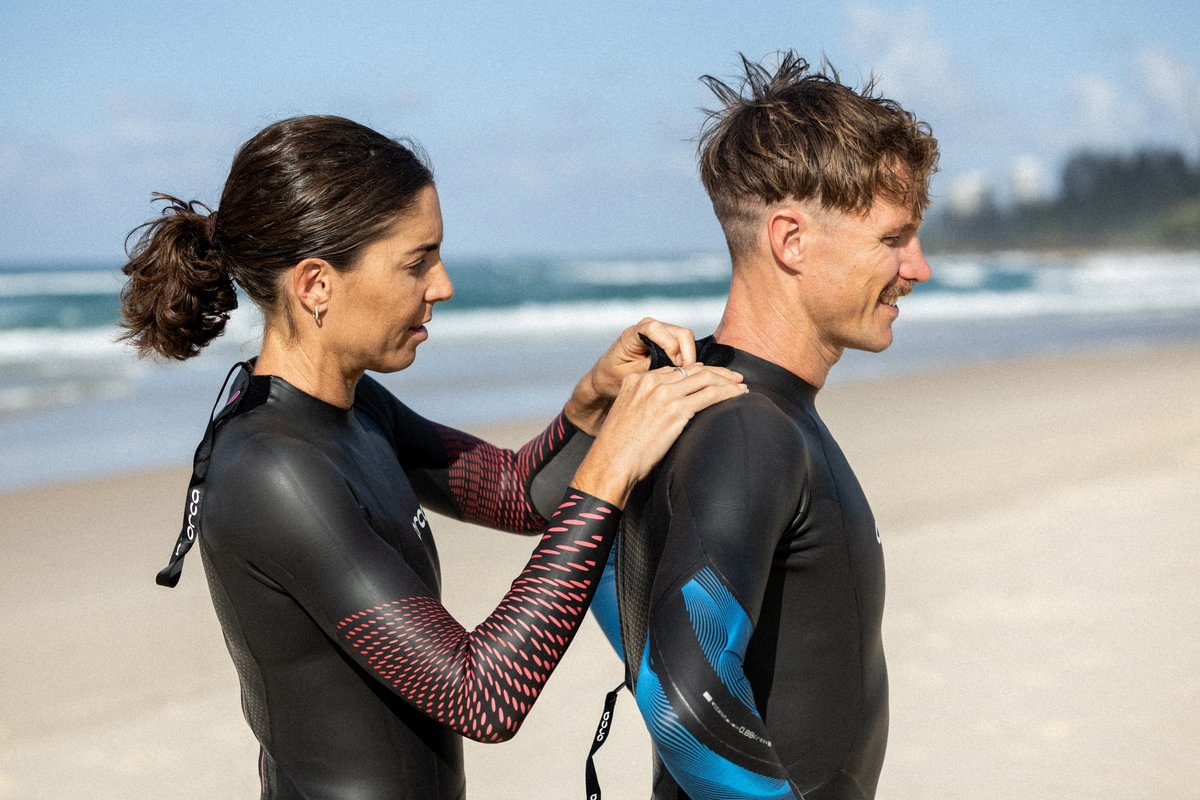
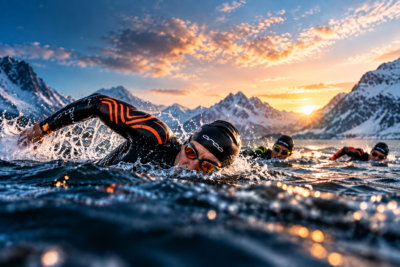
A triathlon wetsuit (see our choices for men and women) is far more than a buoyancy aid. Designed specifically for open-water swimming, it serves two primary purposes: protecting athletes from cold-water exposure and improving swimming performance through enhanced body position and hydrodynamic efficiency.
Modern triathlon wetsuits combine varying neoprene thicknesses with highly flexible shoulder panels to maximize buoyancy while preserving a natural stroke. As a result, they have become standard equipment for most open-water races. However, their use is strictly regulated according to water temperature. Depending on race conditions, a wetsuit may be mandatory, optional, or prohibited.
How Does a Wetsuit Improve Performance?
The performance benefits of a triathlon wetsuit are largely explained by biomechanics and physiology.
Improved Body Position
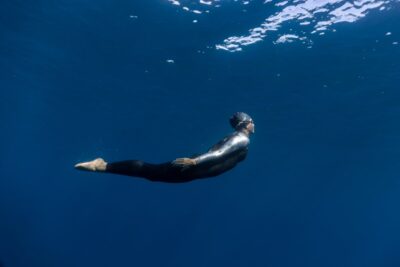
Neoprene contains thousands of microscopic gas bubbles that provide significant buoyancy. This additional lift raises the hips and legs, allowing swimmers to maintain a more horizontal position in the water.
A flatter body position reduces frontal drag, improves hydrodynamic efficiency, and decreases the energy required to maintain proper alignment throughout the swim.
The effect is particularly beneficial for age-group athletes and triathletes who naturally experience leg drop during freestyle.
Reduced Energy Cost
By improving body position, a wetsuit decreases the muscular effort required to keep the body streamlined.
Research has shown that swimming with a properly fitted wetsuit can lead to:
- lower oxygen consumption (VO₂) at a given pace;
- reduced heart rate;
- improved swimming economy;
- lower perceived exertion.
This energy conservation becomes especially valuable in triathlon, where preserving glycogen stores during the swim can positively influence cycling and running performance.
Increased Swimming Speed
Numerous studies have demonstrated measurable improvements in swimming performance when wearing a wetsuit.
Depending on swimming ability and technique, athletes may experience speed improvements of approximately 2–7% compared with swimming without a wetsuit.
The greatest gains are generally observed in less experienced swimmers, while elite swimmers benefit more from thermal protection and energy conservation than from additional buoyancy.
Thermal Protection: The Primary Function
Although wetsuits are often associated with speed, their original purpose is thermal insulation.
Cold water accelerates heat loss nearly 25 times faster than air. Prolonged exposure may result in:
- progressive cooling of core temperature;
- peripheral vasoconstriction;
- increased cardiovascular stress;
- reduced muscle function and coordination;
- increased risk of hypothermia.
Neoprene slows heat transfer by trapping a thin layer of water between the suit and the skin, allowing the body to warm this layer and reduce further heat loss.
Maintaining body temperature helps athletes preserve neuromuscular function and sustain performance throughout the swim.
Wetsuit Regulations in Triathlon
For safety and fairness, race organizers determine wetsuit legality according to water temperature.
Cold Water: Wetsuit Mandatory
When water temperature is sufficiently low, wearing a wetsuit becomes mandatory.
Its thermal protection significantly reduces the risk of cold shock and hypothermia, making it an essential safety device rather than simply performance equipment.
Moderate Water Temperature: Wetsuit Optional
In temperate water, wetsuits are optional.
Athletes may decide whether to wear one based on:
- swimming ability;
- tolerance to cold;
- race strategy;
- confidence in open water.
Most age-group triathletes choose to wear a wetsuit because the buoyancy and energy savings generally outweigh the slightly longer transition time.
Warm Water: Wetsuit Prohibited
When water temperature exceeds the limit established by the race regulations, wetsuits become prohibited.
There are two main reasons:
- they provide an unfair buoyancy advantage;
- they increase the risk of overheating during prolonged, high-intensity exercise.
Temperature thresholds differ between governing bodies such as World Triathlon, IRONMAN, and national federations, but the underlying principles remain identical: athlete safety and fair competition.
Choosing the Right Wetsuit
Performance depends not only on neoprene quality but also on fit.
A well-designed triathlon wetsuit should provide:
- excellent shoulder flexibility;
- graduated buoyancy through the torso and legs;
- minimal restriction to breathing;
- varying neoprene thicknesses (typically 2–5 mm) depending on body area.
An oversized wetsuit allows excessive water circulation, reducing thermal efficiency, while an overly tight suit restricts shoulder mobility and increases muscular fatigue.
Final Verdict
A triathlon wetsuit is both a safety device and a performance-enhancing piece of equipment. By improving buoyancy, reducing hydrodynamic drag, lowering energy expenditure, and protecting against cold-water exposure, it enables athletes to complete the swim more efficiently while conserving energy for the bike and run.
Its use, however, is determined by water temperature. In cold water, wetsuits are mandatory for athlete safety. In moderate temperatures, they are optional, allowing competitors to choose according to their experience and race strategy. When the water becomes warm enough, wetsuits are prohibited to prevent overheating and maintain competitive fairness.
For most triathletes, a properly fitted wetsuit remains one of the most valuable investments for improving comfort, confidence, and open-water performance.